
Urocit®-K (potassium citrate)

Switch to mobile view »
Kidney stones hurt. Forgetting your medications can hurt more.

If you've had a kidney stone, you know how much it hurts. But even though it's hard to forget the pain, over time it can be easy to forget the diet guidelines and daily medications that help prevent new stones. The truth is, patients who form just one kidney stone have a 50% higher risk of forming another stone in the next 5 to 10 years. If you've already had two or more stones, your risks of forming additional stones can be even higher.1

That's why continued compliance is your best protection against another kidney stone attack. But for many patients, it can be a real challenge to keep up with multitablet, multidose medication therapies.2,3

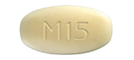
New Urocit®-K 15 mEq (1620 mg) potassium citrate tablets make compliance simpler

Urocit-K 15 mEq provides more active ingredient per tablet than other Urocit-K formulations, such as 10 mEq (1080 mg) potassium citrate and Urocit-K 5 mEq (540 mg) potassium citrate. This means you will need fewer pills per dose and may also need fewer doses over the course of the day. (Your doctor will tailor the exact dosing schedule to your individual medical requirements.)

How Urocit-K works

The key ingredient in Urocit-K is potassium citrate, which works by restoring naturally occurring chemicals in the urine that stop crystals from forming and also inhibits the formation of the 2 most common types of kidney stones, calcium oxalate and uric acid stones. In numerous studies, patients treated with Urocit-K have demonstrated significantly lower rates of kidney stone formation. In many patients, new stones do not form at all.4,5,6

A gentle, extended-release formula

A special wax-matrix delivery system in Urocit-K 15 mEq allows for extended-release of potassium citrate. This helps to maintain the targeted levels of urinary citrate and urinary pH that are important for continuous protection against crystal growth and stone formation. It also helps to ensure that your therapy is easy to tolerate because it is gentler on your digestive system.

This material is intended to provide basic information. Patients should discuss all medical advice, diagnosis, and treatment with their healthcare provider.
  1. Chandhoke PS.. Evaluation of the recurrent stone former. Urol Clin North Am. 2007 Aug;34(3):315-22.
  2. Lotan Y. Economics and cost of care of kidney stone disease. Advances Chronic Kidney Dis. 2009;16:5-10.
  3. Claxton AJ, Cramer J, Pierce C. A systematic review of the associations between dose regimens and medication compliance. Clin Ther. 2001;23(8):1296-1310.
  4. Pak CY, Fuller C, Sakhaee K, Preminger GM, Britton F. Long-term treatment of calcium nephrolithiasis with potassium citrate. J Urol. 1985 Jul;134(1):11-9.
  5. Preminger GM, Sakhaee K, Skurla C, Pak CY. Prevention of recurrent calcium stone formation with potassium citrate therapy in patients with distal renal tubular acidosis. J Urol. 1985 Jul;134(1):20-3.
  6. Pak CY, Peterson R, Sakhaee K, Fuller C, Preminger G, Reisch J. Correction of hypocitraturia and prevention of stone formation by combined thiazide and potassium citrate therapy in thiazide-unresponsive hypercalciuric nephrolithiasis. Am J Med. 1985 Sep;79(3):284-8.